

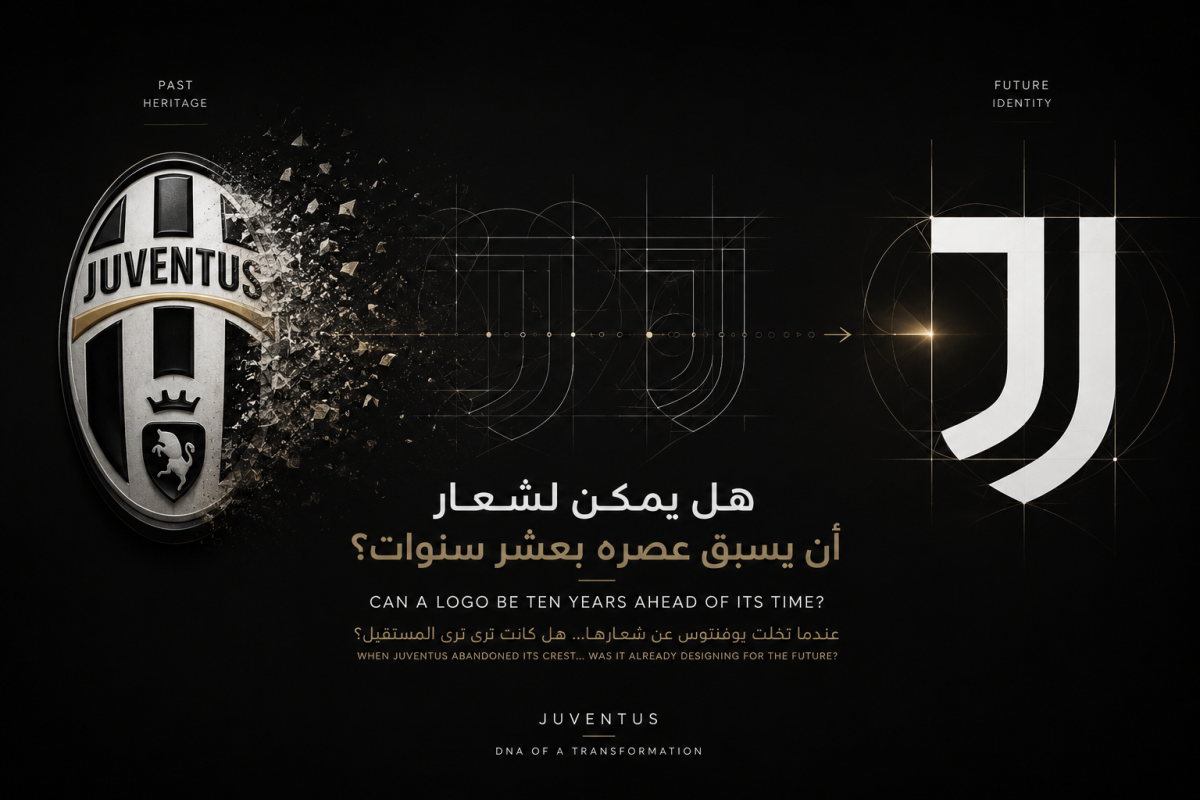
In 2017, Juventus didn't simply redesign its logo.
It challenged the way the world thinks about sports branding.
Overnight, the traditional crest disappeared.
The bull was gone.
The crown vanished.
The history embedded in every detail was replaced by a single, bold letter.
The real question was never:
"Why did the logo become so simple?"
The real question was:
"Was Juventus designing for the future while everyone else was still looking at the past?"
When a Logo Stops Being Just a Logo
For decades, football crests tried to tell entire stories.
Shields.
Animals.
Crowns.
Stars.
History.
Identity.
Juventus chose a different question.
What if a logo could become something bigger?
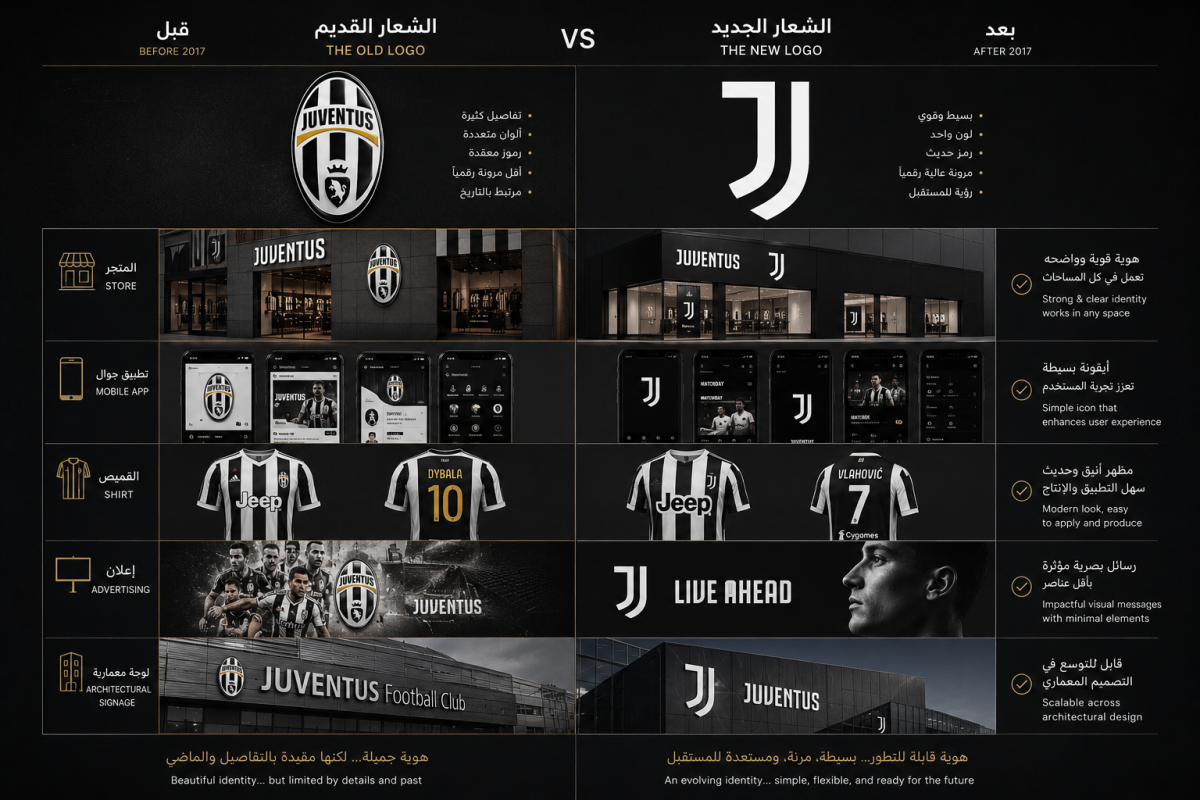
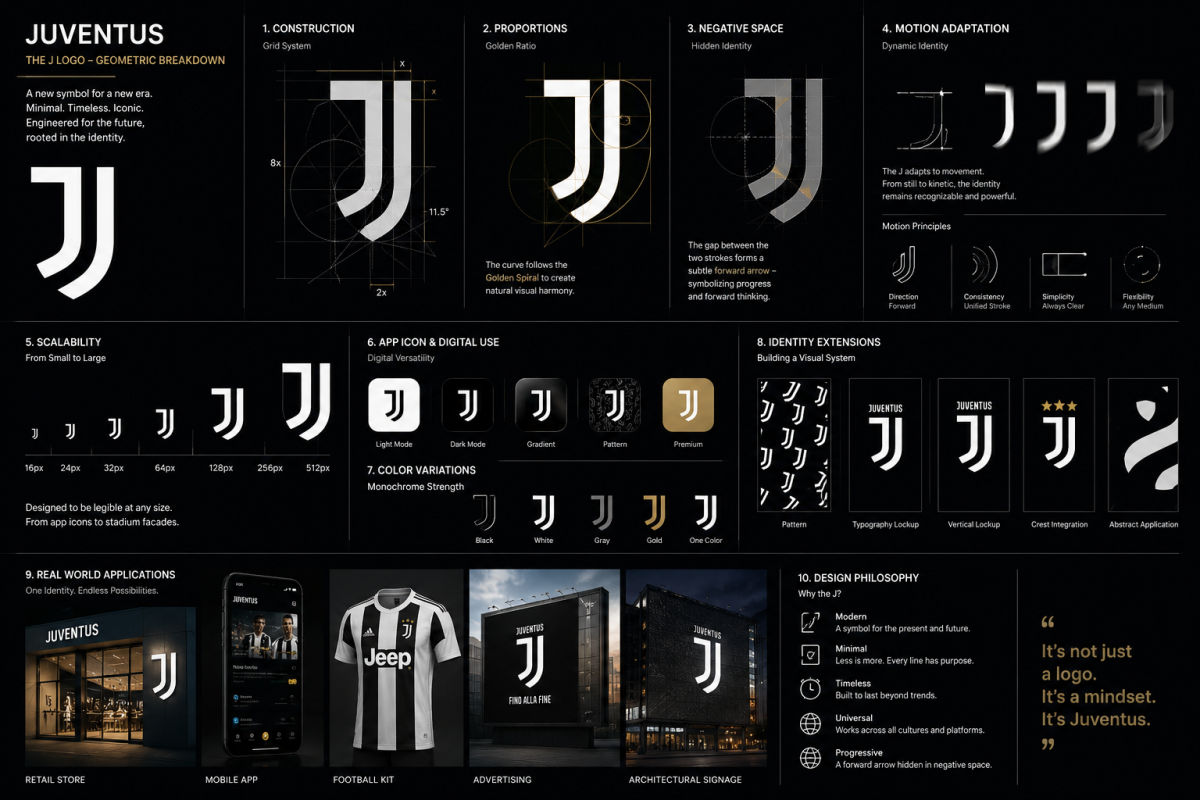
What if it evolved into a complete design language capable of living everywhere?
On mobile apps.
Fashion stores.
Architecture.
Digital products.
Merchandise.
Motion graphics.
That's where the transformation truly began.
From Football Club to Global Lifestyle Brand
Before 2017, Juventus primarily represented a football club.
After 2017...
it became something much larger.
A global brand.
Football clubs sell matches.
Brands sell lifestyles.
Fashion.
Experiences.
Culture.
Design.
Music.
Luxury.
To achieve that vision, Juventus needed an identity capable of existing far beyond the stadium.
Simplicity Wasn't the Goal
Many people assumed Juventus removed details simply to look modern.
But minimalism wasn't the objective.
Responsibility was.
Every element you remove increases the importance of what remains.
When ornaments disappear...
proportion becomes identity.
When the crest disappears...
geometry becomes personality.
Simple design isn't easier.
It's far more demanding.
It Was Never Designed Only for Football
Perhaps this is the most fascinating part.
The new Juventus logo doesn't feel like a traditional sports emblem.
It feels equally comfortable on:
A luxury fashion label.
A smartphone application.
A premium watch.
An architectural facade.
A streaming platform.
Or a technology product.
Because Juventus wasn't redesigning a football logo.
It was building a digital-first identity system.
Why So Many Fans Rejected It ?
People rarely compare design to the future.
They compare it to memories.
Fans weren't reacting to black lines.
They were reacting to history.
To Del Piero.
Buffon.
Nedvěd.
Trezeguet.
Moments they feared were disappearing.
But identities don't erase history.
Great identities reinterpret it.
The Lesson for Designers
This story isn't about football.
It's about courage.
How often do we add another button because empty space feels uncomfortable?
How often do we keep visual elements simply because they've always existed?
Juventus proved something remarkable.
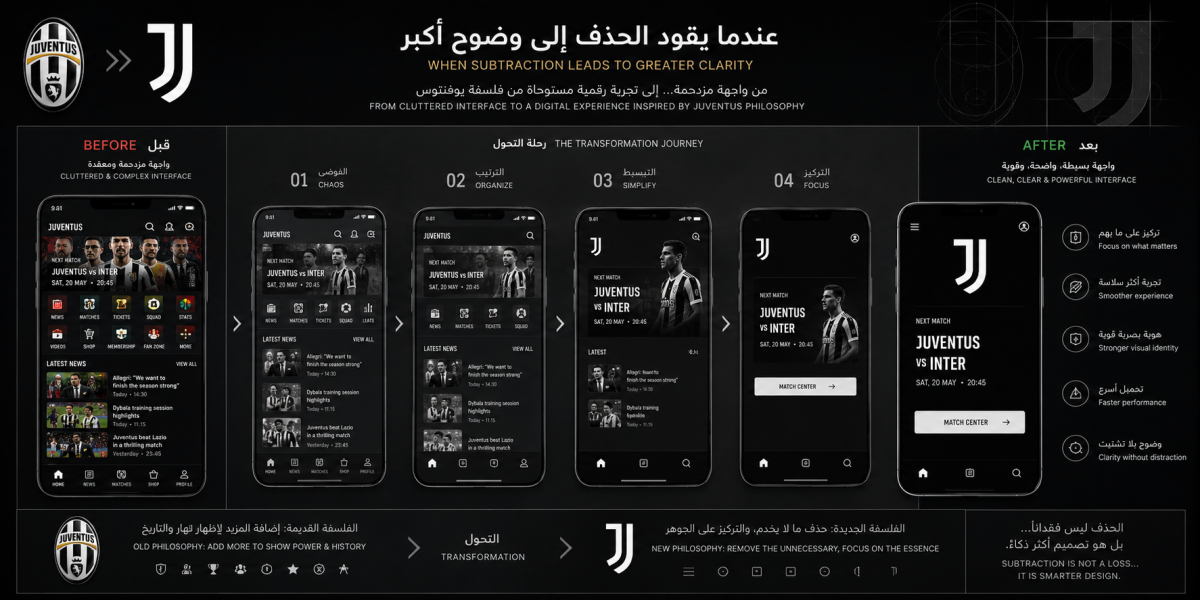
Great design isn't afraid of removing.
It knows exactly when removing becomes the boldest design decision of all..
From Logo to Design System
The logo was never the final destination.
It was only the beginning.
It became part of:
Mobile applications.
Motion graphics.
Retail environments.
Fashion.
Tickets.
Digital experiences.
Architecture.
Merchandise.
Every touchpoint speaks the same visual language.
That is the difference between designing a logo...
and designing an identity system.
Conclusion
The new Juventus logo wasn't designed to win instant approval.
It was designed to survive the next decade.
Great identities don't remain relevant because they're beautiful.
They remain relevant because they're adaptable.
Perhaps Juventus never changed its logo.
Perhaps it simply redefined what a football club's identity could become.
🧬 Design DNA Extract
What Can Designers Learn from Juventus?
Design systems, not just logos.
Remove everything that doesn't create value.
Build identities that scale across every platform.
Simplicity increases responsibility.
Design for the future—not for nostalgia.
Identity is more than history; it's a vision.
Great brands evolve without losing their soul.