
Open an app you've never used before.
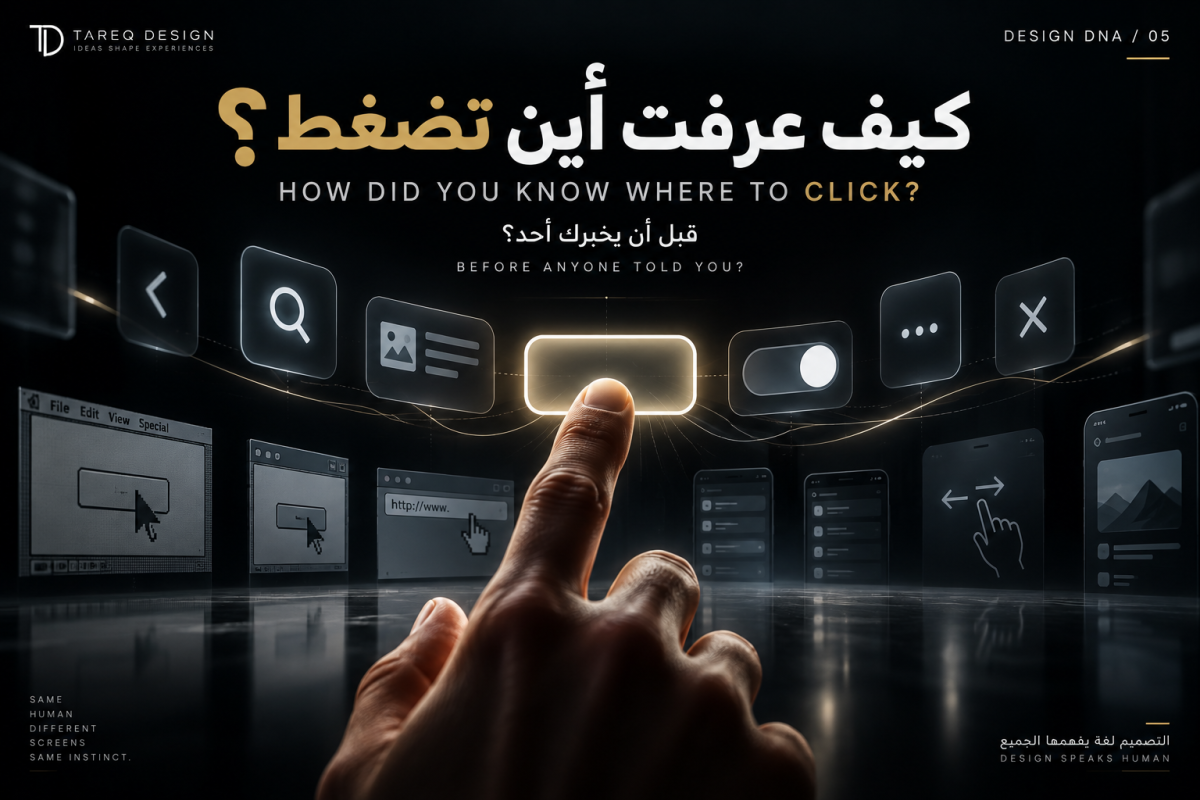
Within seconds, you'll probably know where to click, where to search, how to go back, and what can be swiped.
Nobody explained it to you.
So... who taught you?
You've Never Seen This Interface. But You Know Its Language.
The app may be new.
Its language isn't.
When you see an X in the corner, you expect it to close something.
A magnifying glass means search.
An arrow means go back.
Three horizontal lines suggest a menu.
And when a rectangle has the right contrast, position, and shape...
you want to press it.
Nobody gave you an instruction manual.
You simply knew.
Because you never enter an interface with an empty mind.
You bring years of previous experiences with you.
We Learned a Language We Never Studied
Imagine walking into an unfamiliar room.
You see a handle on a door.
There is no label saying:
"Grab here and pull."
Yet you do it.
The object communicates what can be done with it.
Digital products gradually learned to do the same.
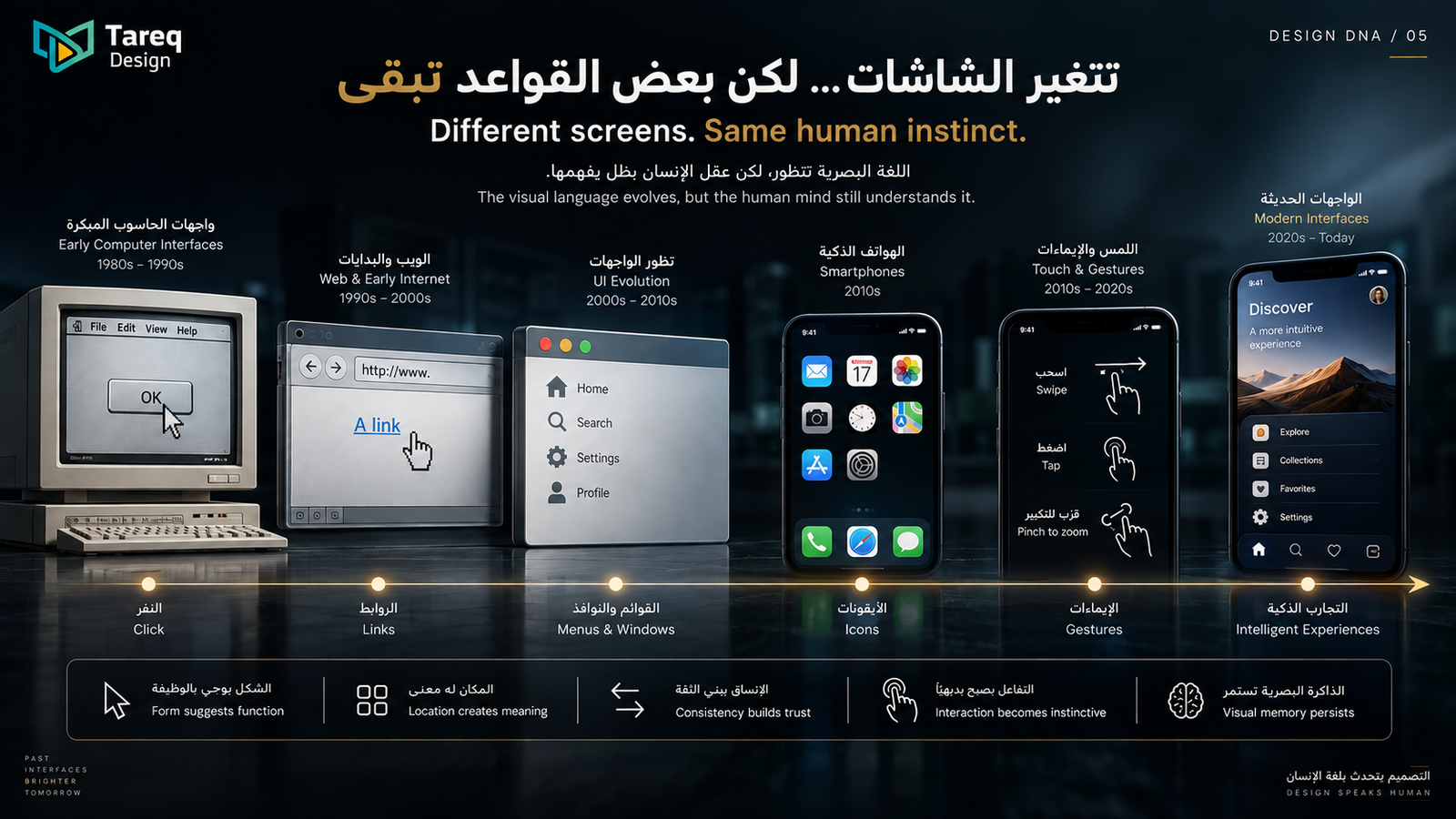
Over decades, we learned that certain shapes, positions, and behaviors mean certain things.
Button.
Link.
Menu.
Window.
Swipe.
Close.
Back.
Search.
After millions of repetitions...
they stopped being individual design elements.
They became a language.
Every Click Contains a Memory
When you design a button today...
you're not starting from zero.
Thousands of buttons came before yours.
When users encounter something similar, their brains quietly ask:
Can I click this?
Will it react?
Will it take me somewhere?
Is it more important than the object beside it?
These judgments happen remarkably quickly.
That's why great design doesn't always need to say:
Click here.
Its appearance says it first.
Who Invented This Language?
No single person did.
It was built collectively by generations of products, designers, and users.
Desktop computers taught us windows.
The web taught us hyperlinks.
Touchscreens taught us touch.
Smartphones taught us swiping, pinching, and gestures.
Every generation added new words to our visual vocabulary.
Until eventually, we developed something remarkably powerful:
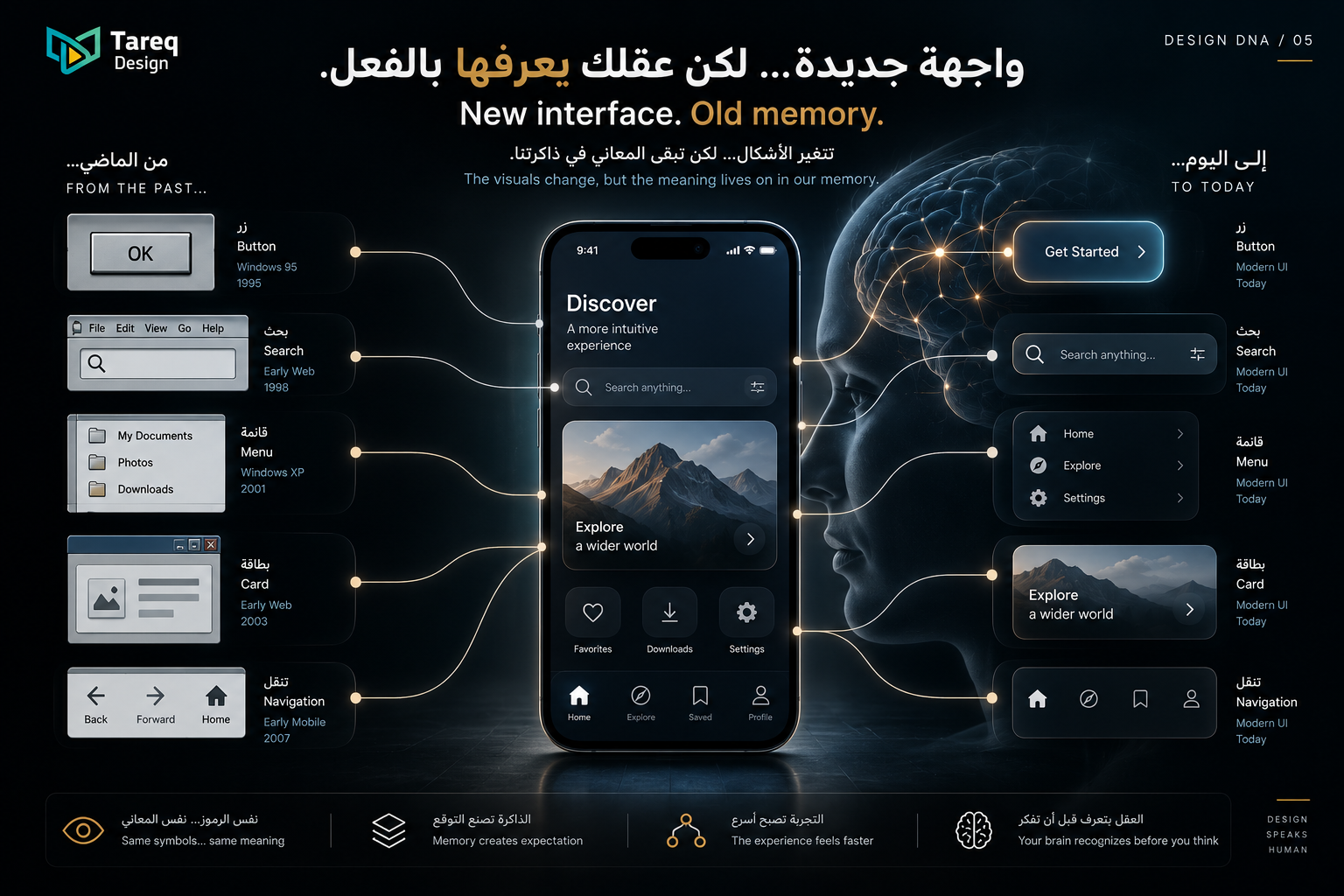
A collective memory of interfaces.
Good Design Borrows From Your Memory
This leads to one of UX's most important ideas:
Mental Models.
Users already have expectations about how things work.
Enter an online store and you expect the cart somewhere familiar.
See the website's logo and you probably expect it to lead home.
Open an image and you expect a familiar way to close it.
Great designers use those expectations.
Not because they lack creativity.
But because they understand that a user's attention is too valuable to waste relearning things that don't need reinventing.
Should Every App Look the Same, Then?
No.
And this is where design becomes difficult.
Follow everything users already know...
and nothing truly new happens.
Break everything they know...
and they won't know how to use your product.
Great design exists between those extremes.
Familiar enough to understand.
New enough to remember.
Change the button.
But don't make it look impossible to click.
Invent a new navigation system.
But don't make users search for an exit.
Break the rule if you need to.
Just understand which rule you're breaking—and why.
When Creativity Becomes the Problem
Sometimes a designer creates something visually extraordinary.
Then a user arrives...
and has no idea what to do.
That's one of design's strangest contradictions:
An interface can be beautiful enough to fail.
If users have to discover that text is actually a button...
that an image is secretly navigation...
or that an invisible gesture is the only way forward...
design has stopped helping.
It has become a puzzle.
And UX shouldn't be an intelligence test.
The Best Interface Lets Your Brain Predict It
A seamless experience isn't merely one where everything works.
Things happen approximately as the user expected.
Click.
Expected result.
Swipe.
Expected movement.
Go back.
Expected destination.
Every time the interface confirms a small expectation...
trust grows.
Perhaps that's why some products feel so "natural."
Not simply because they're minimal.
But because they're speaking a language the brain already understands.